Types of Airspace
A practical IFR-focused map of Class A through G, plus special use airspace and operational planning implications.
Quick Reference
Key points
Short-answer refresher for returning pilots before diving into the full page.
Quick Reference
Key points
Short-answer refresher for returning pilots before diving into the full page.
- Airspace class is an operational signal: it changes communication requirements, service expectations, and how much structure ATC applies.
- Most GA IFR time is in Class E, so knowing floors, transitions, and terminal boundaries matters more than memorizing only Class B diagrams.
- Special-use airspace is a status problem as much as a charting problem, so verify activity and reroute options before launch.
Standards & References
FAA doctrinal and ACS cross-reference
Use this box to line the topic up with the FAA’s primary instrument handbooks, the most relevant ACS task areas, and the knowledge, skill, and risk elements that usually drive checkride evaluation.
- IFH Ch. 8, Flight Planning: airspace considerations, route selection, and preflight decisions tied to communication and service requirements.
- IFH Ch. 9, IFR Flight: ATC interaction and phase-of-flight workload as operations move across terminal and en route airspace.
- IPH Ch. 1, Departure Procedures: departure environment, obstacle procedure integration, and early terminal airspace structure.
- IPH Ch. 2, En Route Operations: airway and en route operations inside controlled airspace with clearance and altitude compliance.
- IPH Ch. 3 and Ch. 4, Arrivals and Approaches: terminal airspace transitions, sequencing, and protected procedure execution.
- I.E National Airspace System.
- III.A Air Traffic Control Clearances.
- III.B Compliance with Departure, En Route, and Arrival Procedures and Clearances.
Glossary Links
Relevant IFR altitude terms
Quick access to common charted altitude abbreviations used across IFR pages.
Glossary Links
Relevant IFR altitude terms
Quick access to common charted altitude abbreviations used across IFR pages.
On This Page
Overview
The National Airspace System is organized into classes so separation responsibility, communication requirements, weather minimums, and equipment expectations are predictable. For instrument pilots, knowing the airspace class is not just a legal detail. It changes how clearances are issued, how services are provided, and what fallback options are realistic when weather or workload increases. [AIM 3-1] [14 CFR Part 71]
At a high level:
- Controlled airspace: Class A, B, C, D, and E.
- Uncontrolled airspace: Class G.
- Special use and other designated airspace: Prohibited, restricted, warning areas, military operations areas, alert areas, and temporary flight restrictions.
Class definitions and structure: [AIM 3-2]; special-use categories: [AIM 3-3].
The most useful way to study this is not by memorizing letters. Study what each class changes in real cockpit decisions: who you must talk to, what services you should expect, and what margins you need to protect.
Controlled Airspace
Controlled airspace means ATC services are available under defined rules. The exact service level depends on whether you are operating IFR or VFR, but for IFR pilots the key point is this: controlled airspace gives a structured system for separation and traffic flow, while still requiring the pilot to remain ahead of terrain, weather, and aircraft performance limits. [AIM 3-2] [14 CFR Part 91 Subpart B]
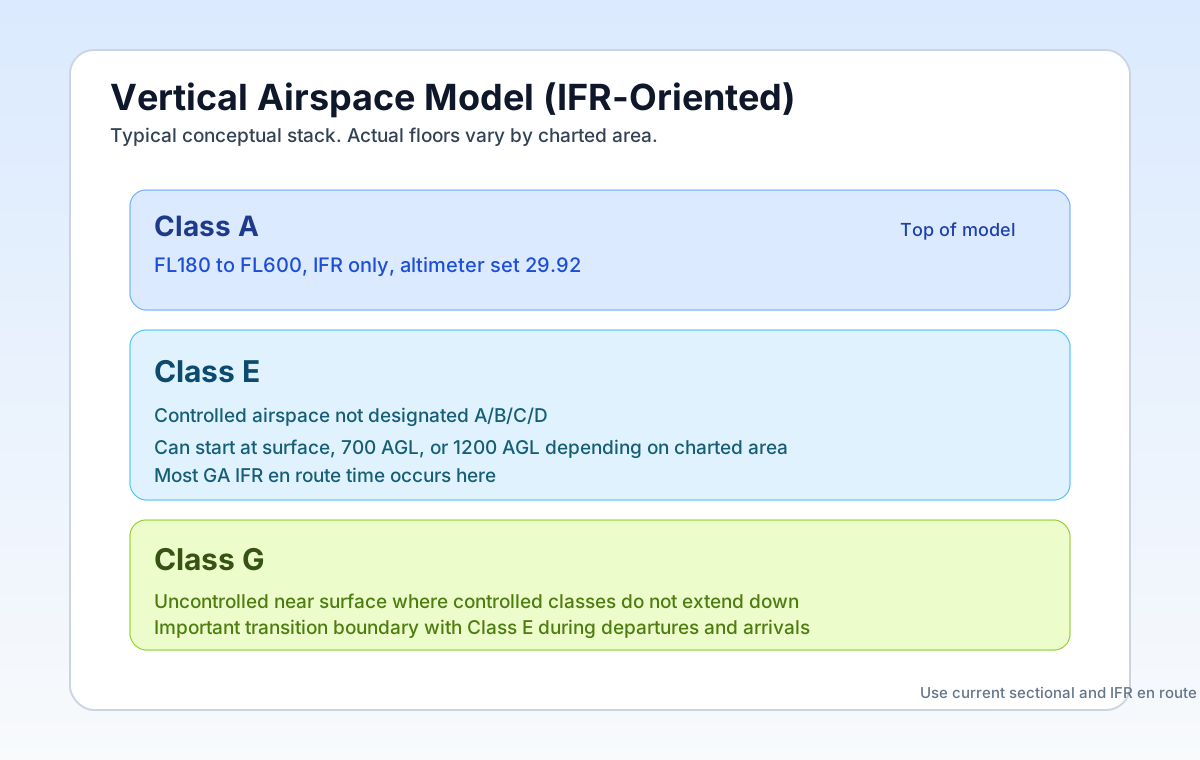
Class A
- Generally from 18,000 feet MSL up to and including FL600 in the U.S.
- IFR only. Operations require an IFR clearance and two-way ATC communications.
- Altimeters are set to 29.92 in. Hg and altitudes are flown as flight levels.
Class A operating rules and flight level conventions: [AIM 3-2] [14 CFR Part 91 Subpart B].
Operationally, Class A is a high-structure environment. Route and altitude changes are tightly integrated with the IFR system, and planning errors usually show up as clearance amendments rather than casual tactical deviations.
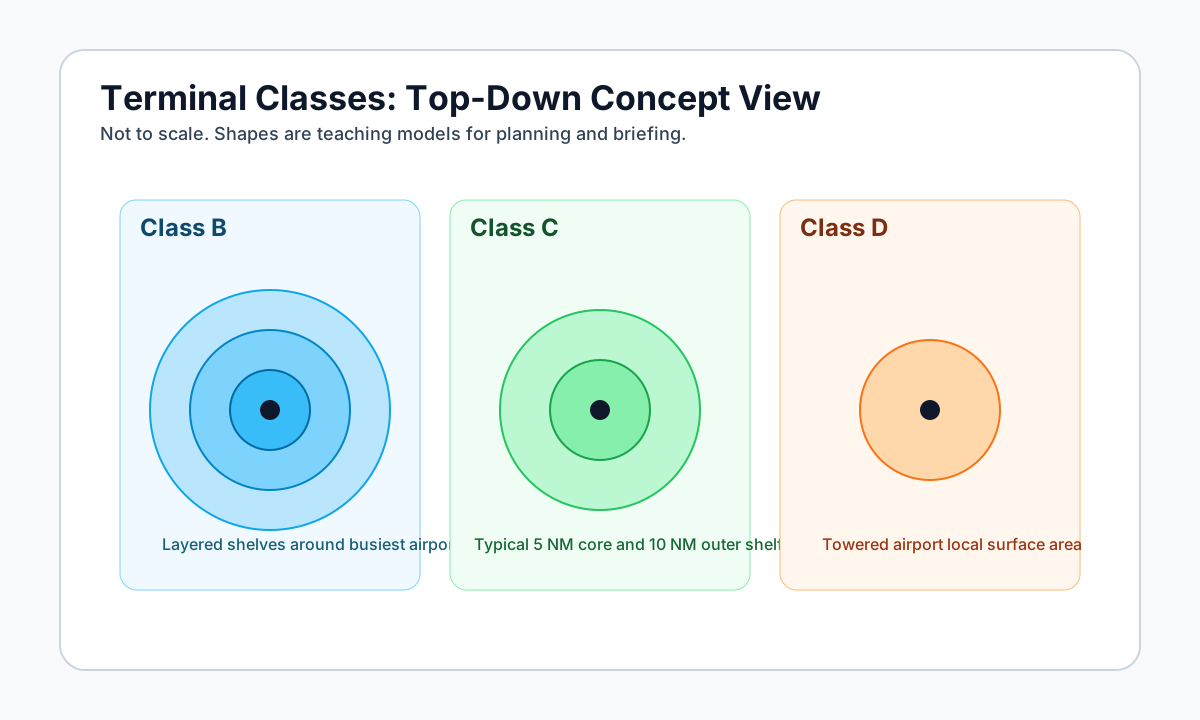
Class B
- Surrounds the busiest primary airports, usually with layered shelves.
- Designed to protect heavy traffic flows with strong ATC control.
- For VFR, an explicit clearance is required to enter. IFR traffic is sequenced as part of the standard terminal flow.
Class B entry and service expectations: [AIM 3-2].
For IFR planning, expect speed management, vectors, and route shaping to happen early. Class B workload is often less about basic aircraft control and more about being ready for rapid, precise clearance changes.
Class C
- Typically a 5 NM core surface area and a 10 NM outer shelf.
- Built around airports with an operating control tower, radar approach control, and moderate-to-high traffic volume.
- Two-way communication and transponder requirements apply in designated areas.
Class C dimensions and communication/transponder requirements: [AIM 3-2] [14 CFR Part 91 Subpart B].
Class C usually provides a good balance between structure and flexibility. IFR pilots should still brief likely vectoring and frequency changes before entering the terminal environment.
Class D
- Usually extends from the surface to about 2,500 feet above airport elevation around towered airports.
- Shape and dimensions are tailored to local procedures and traffic flow.
- When the tower closes, the airspace may revert to Class E or G depending on publication.
Class D structure and tower-hours dependency: [AIM 3-2].
Class D is where many procedural details become local. IFR departures and arrivals can be straightforward, but pilots should verify tower hours and after-hours airspace status during preflight, not after startup.
Class E
- Controlled airspace that is not A, B, C, or D.
- Can begin at the surface, 700 feet AGL, 1,200 feet AGL, or another published floor, and extends upward to but not including Class A where applicable.
- Contains most federal airways and a large portion of the IFR en route structure.
Class E floors and en route relevance: [AIM 3-2] [14 CFR Part 71].
Most IFR flight time in general aviation happens in Class E. It is common, but not simple: MEAs, obstacle clearance, weather, and traffic management still drive risk even when ATC services are available.
Uncontrolled Airspace
Class G
Class G is uncontrolled airspace, usually near the surface in areas where controlled airspace does not extend all the way down. ATC separation service is not provided to VFR traffic in Class G, and service availability for IFR traffic depends on radar and communication coverage as well as phase of flight. [AIM 3-2]
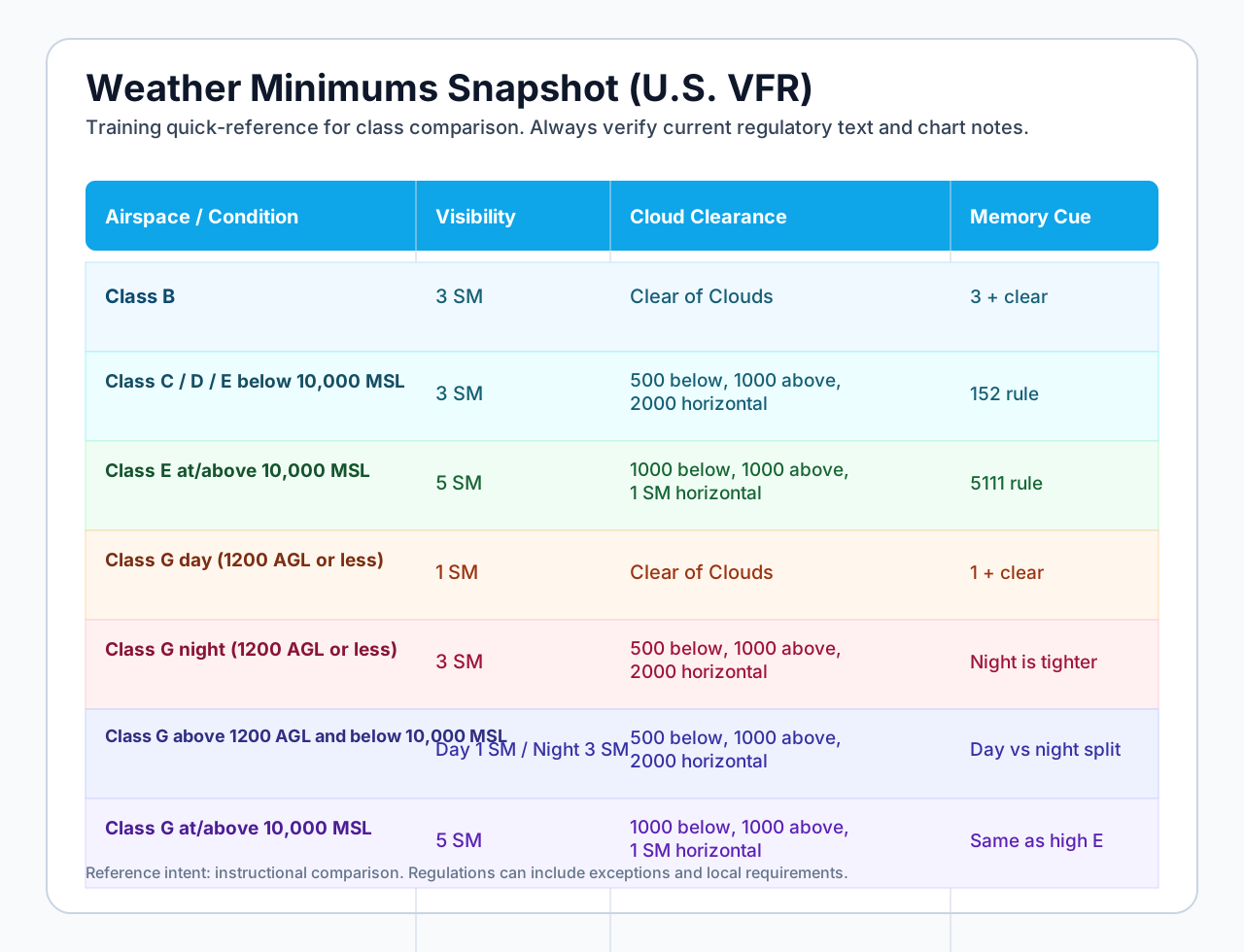
- Weather minimums vary by altitude, time of day, and distance from clouds.
- Operations near the Class G to Class E boundary require strong situational awareness of floor altitudes.
- At non-towered airports, IFR departures and arrivals often involve a transition between non-ATC local operations and the controlled IFR system.
In practice, Class G is where many risk-management habits matter most: terrain margin discipline, lighting and visibility judgment, and conservative departure or alternate planning when weather is marginal.
Special Use and Other Airspace
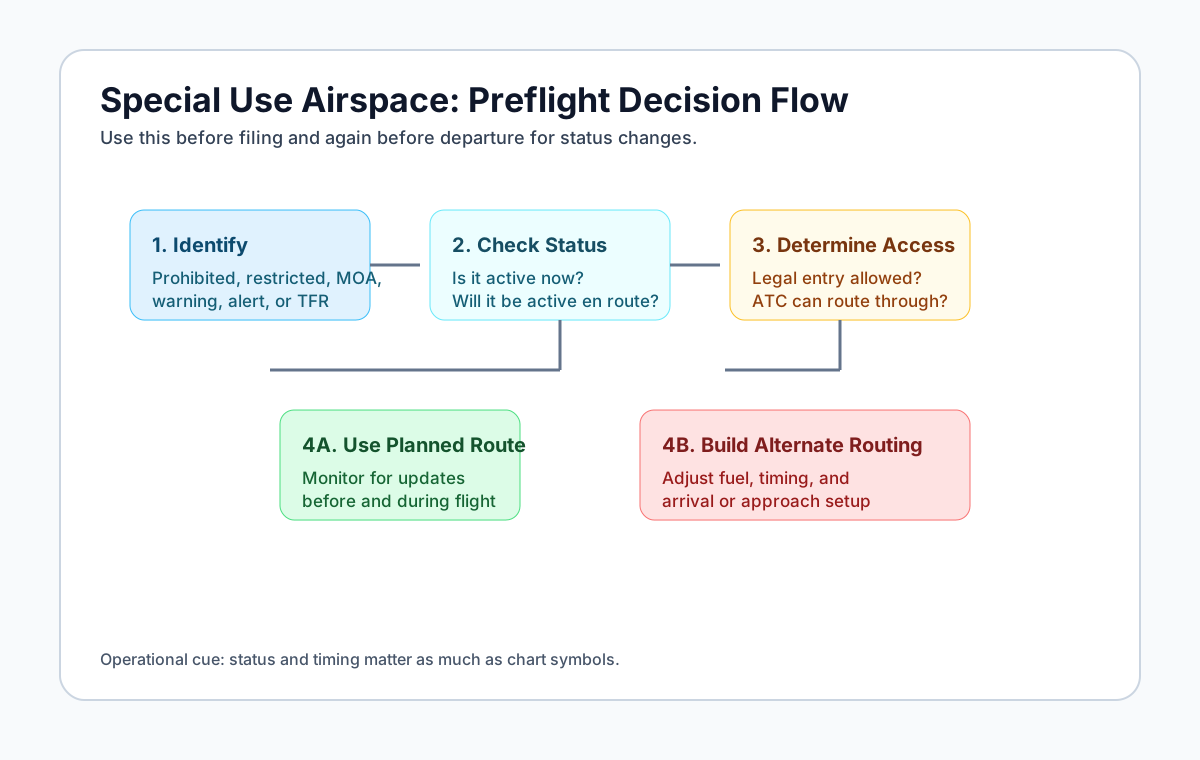
Beyond the standard classes, several designations can restrict or complicate route planning:
- Prohibited areas: Flight is not permitted except under very specific authorization.
- Restricted areas: Operations may be limited when hazardous activities are active.
- Warning areas: Similar hazards located beyond U.S. territorial waters.
- Military Operations Areas (MOAs): High military training activity; VFR caution is essential, and IFR handling depends on activity status and ATC routing.
- Alert areas: High pilot training or unusual activity; increased scanning and planning discipline are expected.
- Temporary Flight Restrictions (TFRs): Time-limited restrictions for hazards, VIP movement, disasters, or security events.
For IFR pilots, the practical rule is simple: verify status, not just chart depiction. A route that looks clean on a static chart can still produce a significant reroute if special use airspace is active. [AIM 3-3] [14 CFR Part 91 Subpart B]
IFR Planning Takeaways
- Know the class before the phase change: departure, terminal, and en route airspace shifts often happen at workload peaks.
- Brief communication and service expectations: what ATC will provide, and what remains pilot responsibility.
- Check special-use status on the day of flight: plan A and reroute plan B should both be realistic.
- Treat airspace as a risk-management input: congestion, complexity, and fallback options should influence alternate and fuel decisions.
When pilots think of airspace as an operational system instead of a memorization table, ATC interaction becomes smoother and unexpected changes are easier to absorb safely.
Weather Minimums Snapshot
Even for IFR-focused study, this quick matrix helps connect airspace class to visual-weather operating margins. It is especially useful when planning alternates, departures from non-towered airports, and transitions between Class G and Class E at dusk or night. [14 CFR Part 91 Subpart B] [AIM 3-2]
References
- 14 CFR Part 71 - Designation of Class A, B, C, D, and E airspace areas; air traffic service routes; and reporting points
- 14 CFR Part 91, Subpart B - Flight Rules
- AIM 3-2 - Controlled Airspace
- AIM 3-3 - Special Use Airspace
- AIM 3-1 - General
- FAA Instrument Flying Handbook (IFH)
- FAA Instrument Procedures Handbook (IPH)
- Airman Certification Standards (ACS)