Instrument (IFR)
Instrument procedures, IFR flight planning, and instrument-focused operations.
IFR Procedures Hero
A visual front door for the full procedures block
Use this section as the fast overview before dropping into the detailed lessons. The three study maps below are the current visual spine of the procedures block: a named SID, a named arrival STAR, and a HILPT hold. Together they frame the most common IFR workload seams before the approach and missed-approach pages take over.
How to use the block
Start with the visual map that matches your weak point, then move into the detailed chart exercise on that page. The goal is to make each phase feel concrete before you study the FAA chart text and ATC phraseology in full.
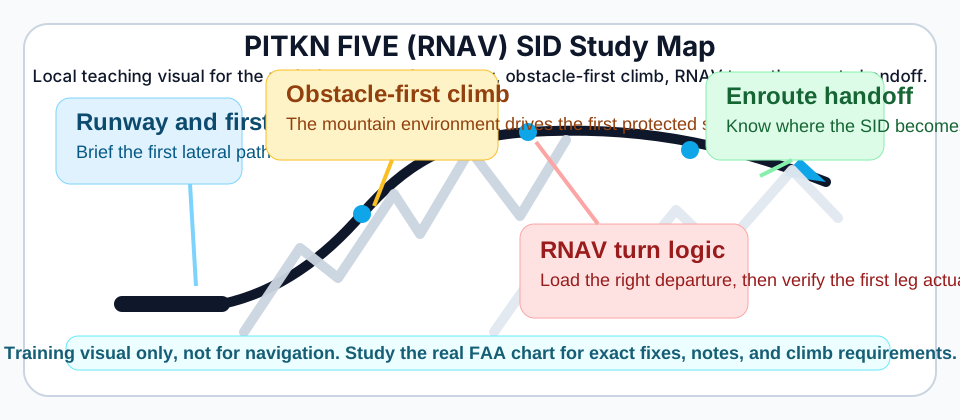
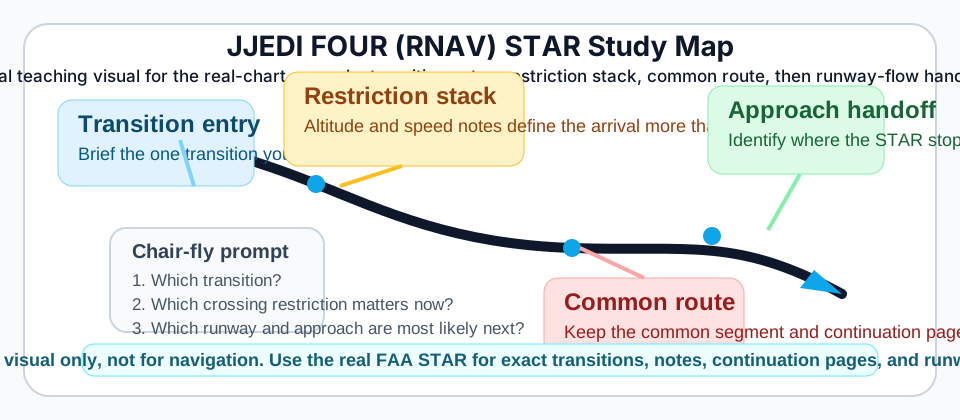
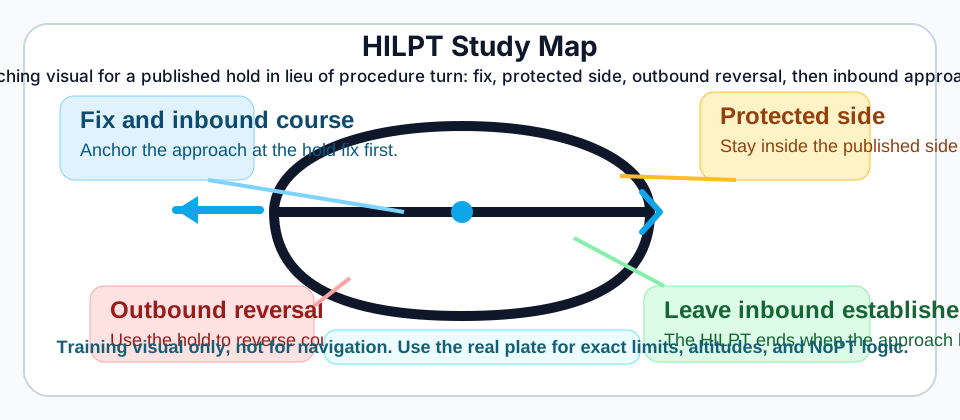
Training Spine
Need the short procedural version first?
Start with Instrument Flying for the IFH-style progression: attitude control, scan methods, basic maneuvers, instrument takeoff, procedure flow, and abnormal responses. Use this IFR section as the deeper reference set.
IFR Procedures Block
Use the procedure pages as one connected IPH Chapters 1-6 sequence
The strongest way to study the procedures section is to move in order: departures, enroute structure, STAR or arrival flow, holding, approach type and minima, then the missed approach. Each page below now pairs a local teaching diagram with a real FAA chart exercise or walkthrough so the section works like a training block instead of a glossary.
IPH Ch. 1-2
Departures and en route
ODPs, SIDs, airway and RNAV structure, reroutes, and real-chart callouts.
IPH Ch. 3
STARs and holding
Arrival transitions, STAR restrictions, hold entries, timing, and wind correction.
IPH Ch. 4
Approach families
ILS, LPV, LNAV, VOR, LOC-BC, and circling with real chart examples.
All phases
Walkthroughs and phraseology
Scenario-based flows, ATC transcripts, and missed-approach transitions across the whole chain.
Modern IFR Cockpit
Looking for the automation page?
Automation and Avionics Management now lives in the IFR study flow too, with autopilot modes, FMA reading, GPS CDI scaling, VNAV versus advisory VNAV, mode confusion traps, and Garmin-style G1000 and G3X examples.
IFR Weather Interpretation
Need the weather page that goes beyond quick topics?
The Weather section now includes an Advanced IFR Weather Interpretation page for skew-T logic, radar interpretation, turbulence forecasting, ceiling and visibility trend analysis, and scenario-based weather decisions.
-
Flight Planning
IFR flight plan filing, format, and planning procedures.
-
IFR Regulations and Legal Interpretation
Part 91 IFR rules, alternates, lost communications, takeoff minimum concepts, and clearance compliance.
-
Attitude Instrument Flying
Instrument scan, control methods, and how to actually fly the airplane on instruments.
-
Integrated IFR Procedures
Scenario-based clearance-to-missed walkthroughs tying the whole IFR chain together.
-
Automation and Avionics Management
Autopilot modes, FMA interpretation, GPS CDI scaling, VNAV versus advisory VNAV, mode awareness, and Garmin-style examples.
-
IFR Risk Management and Personal Minimums
RMH and ACS-focused personal minimums, IFR PAVE and 3P, weather matrices, alternate logic, automation traps, and task saturation management.
-
Departures
SIDs, ODPs, climb gradients, and departure-to-en-route transition.
-
Enroute
Airway and RNAV route structure, changeover logic, reroutes, and real-chart enroute workflow examples.
-
Arrivals and STARs
STARs, transitions, altitude and speed constraints, and arrival-to-approach flow with real chart examples.
-
Approaches
Instrument approach types, structure, and practical use.
-
Holding
Holding entries, timing, wind correction, and real-chart hold briefing concepts.
-
Missed Approaches
Immediate missed-approach actions, hold transitions, phraseology, and common trap management.