IFR Procedures
A scenario-based IFR procedures block covering departures, en route structure, STARs, holding, approaches, missed approaches, and phase-specific ATC phraseology.
Quick Reference
Key points
Short-answer refresher for returning pilots before diving into the full page.
Quick Reference
Key points
Short-answer refresher for returning pilots before diving into the full page.
- Think in phases: departure, en route, arrival, hold, approach, and missed approach each have a briefing trigger and a failure mode.
- The best IFR procedure brief answers what to set, what to expect, what to say, and what the first backup plan is if the picture changes.
- A strong procedures habit keeps the next phase half-briefed before the current one gets busy.
Standards & References
FAA doctrinal and ACS cross-reference
Use this box to line the topic up with the FAA’s primary instrument handbooks, the most relevant ACS task areas, and the knowledge, skill, and risk elements that usually drive checkride evaluation.
- IFH Ch. 8, Flight Planning: route, weather, and pre-approach setup before the procedure chain begins.
- IFH Ch. 9, IFR Flight: clearance, departure, en route flow, arrival, approach, and missed approach sequencing.
- IPH Ch. 1, Departure Procedures and Ch. 2, En Route Operations: published structure behind the early and middle phases of cockpit flow.
- IPH Ch. 3, Arrivals and Ch. 4, Approaches: terminal procedures, holding integration, and final approach structure behind cockpit flow.
- III.B Compliance with Departure, En Route, and Arrival Procedures and Clearances.
- V.B Holding Procedures.
- VI.A through VI.C Instrument Approaches and Missed Approach.
Checkride Focus
How this topic is typically evaluated
Use this block as the ACS-ready summary: what task areas this page supports, what the applicant should know, what the applicant should be able to do, and what risks must be managed without prompting.
Checkride Summary
The checkride question here is whether the pilot stays ahead of the next segment. Good procedure work means the airplane, clearance, source, and missed-approach picture all remain organized through each phase change.
Knowledge
- Know the departure-to-missed sequence, including what changes the active route, altitude, and next phase.
- Understand the minimum chart-brief and setup items needed before each phase begins.
- Know the hold and missed-approach logic well enough that those phases are not abstract surprises.
Skills
- Brief the next segment early and configure the airplane before workload spikes.
- Comply with departure, en route, arrival, approach, and missed-approach clearances in the correct order.
- Transition from one phase to the next without shallow briefing or rushed reprogramming.
Risk Management
- Programming before stabilizing the current segment.
- Flying what was expected instead of what ATC actually cleared.
- Letting source, mode, or missed-approach setup drift behind the airplane.
On This Page
Visual Spine
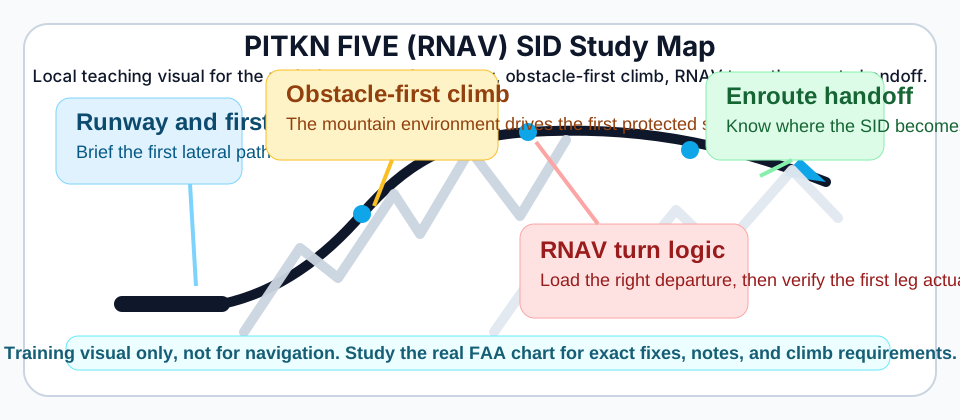
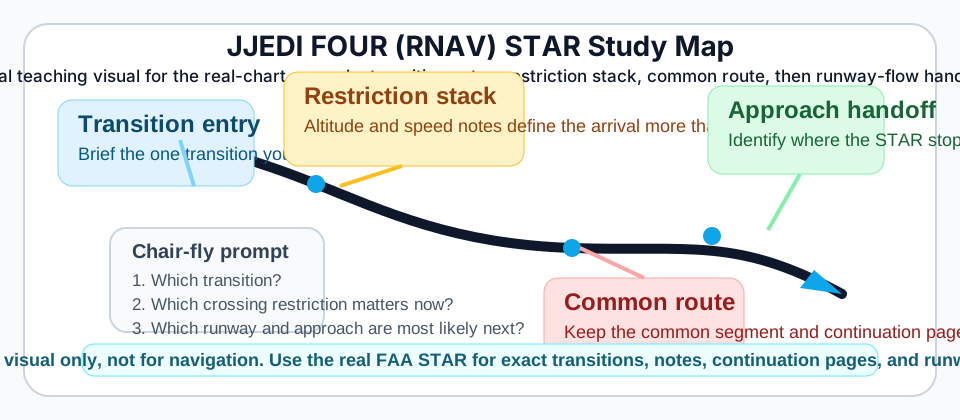
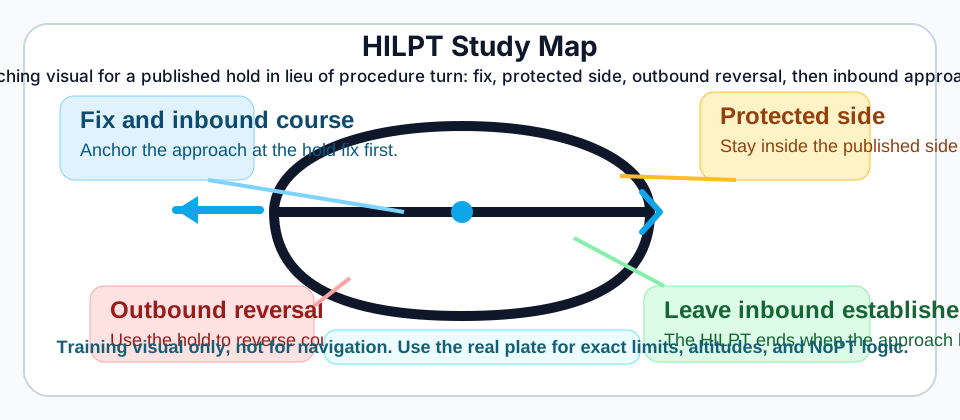
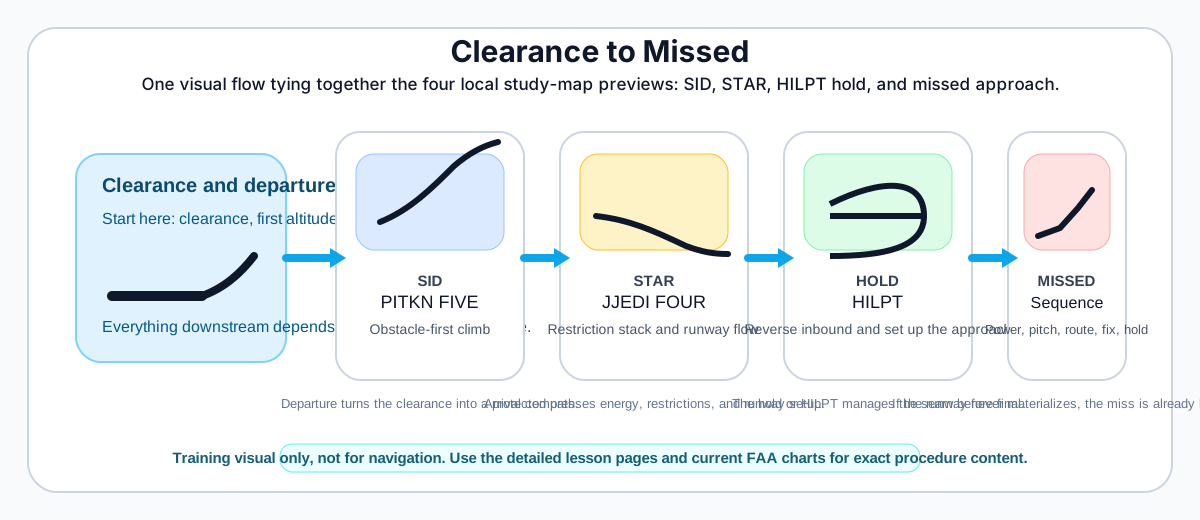
This page now mirrors the larger IFR landing page with the same visual study spine: a named SID, a named STAR, a HILPT hold, and one integrated clearance-to-missed flow. Use the image strip for fast orientation, then use the composite diagram to understand how the pieces connect before you drop into the detailed procedure pages.
Overview
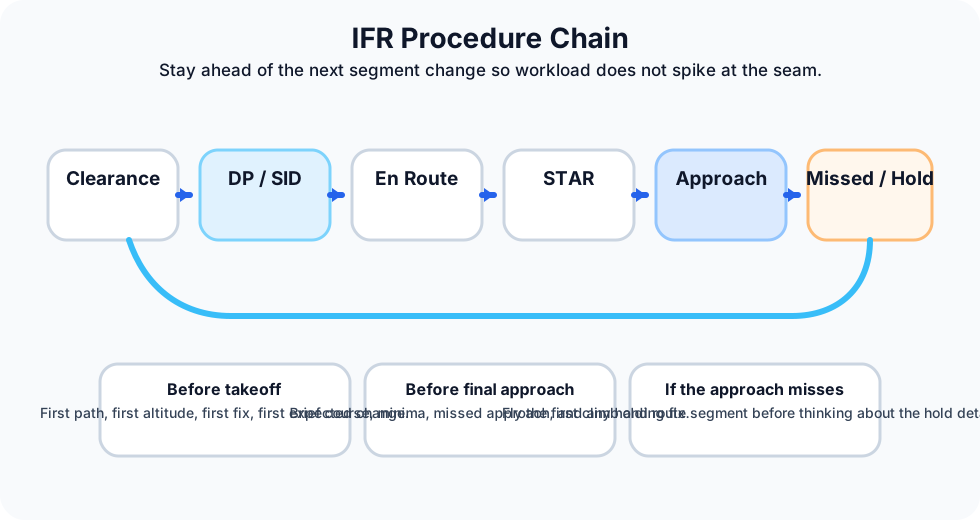
Real IFR flying is one connected procedure chain. The airplane goes from clearance to departure, settles into the en route structure, transitions to the arrival or STAR, manages holds if required, flies the approach that was actually cleared, and then either lands or executes the missed. The workload spikes at each seam, so the pilot needs a simple phase-by-phase workflow that stays ahead of the next change.
The missing layer in many training outlines is avionics management. If the airplane uses autopilot, flight director, GPS sequencing, and approach-mode logic, study this page together with Automation and Avionics Management so source selection, CDI scaling, FMA reading, and missed-approach mode changes stay inside the procedure brief.
Full Procedure Block
Use the procedures pages as one study block, not as isolated references. The sequence below mirrors the way the IPH teaches procedure design and the way an actual IFR flight unfolds in the cockpit.
Phase 1
Departure procedure
ODPs, SIDs, climb gradients, first fix logic, and initial task loading.
Phase 2
En route structure
Airways, RNAV routes, changeover logic, reroutes, and direct clearances.
Phase 3
STAR or arrival
Transitions, crossing restrictions, descent planning, and runway setup.
Phase 4
Holding
Entries, timing, wind correction, and delay management without losing the next approach.
Phase 5
Approach type and minima
ILS, LOC, LPV, LNAV, VOR, and circling with chart-reading and minima logic.
Phase 6
Missed approach
First climb, first routing, fix, hold, and what to do when the runway is not there.
IPH Coverage Checklist
If you are auditing the procedural gap against the FAA Instrument Procedures Handbook, this section now maps directly to the expected sequence: departures, en route structure, STARs, holding, approach types, missed approaches, real chart examples, and ATC phraseology.
Departures
ODPs, SIDs, climb gradients, notes, chart callouts, and first-fix logic.
En Route and STARs
Airway or RNAV structure, reroutes, arrival transitions, and restriction management.
Holding and Missed
Entries, timing, wind correction, missed-approach first actions, and hold transitions.
Approaches and ATC
ILS, LPV, LNAV, VOR, LOC-BC, circling, chart examples, and phraseology by phase.
Departures: ODP and SID
Before takeoff, reduce the departure to four essentials: first lateral path, first altitude, first fix, and first expected change. Whether you are flying an ODP, SID, or radar vectors, that first minute after liftoff should already be mentally loaded.
- DP or SID: know whether obstacle clearance depends on a published course, gradient, or transition.
- En route join: know what will make the airplane leave the departure segment and join the airway or RNAV leg.
- Mode awareness: verify the active source and lateral mode before release, not after takeoff.
The short script is: clearance copied, departure briefed, first nav source active, first altitude bugged. The longer reference is the Departures page, which breaks down ODPs, SIDs, chart anatomy, and climb-gradient logic in more detail.
En Route Structure
The en route phase is where the route either stays organized or slowly starts to unravel. The pilot should know what leg is active now, what altitude protects that leg, what fix will hand the airplane to the next segment, and what to do with a reroute if ATC shortens or changes the clearance.
Scenario
You exit a SID, join a Victor airway, then Center shortcuts you direct to a later fix before the arrival. The correct flow is: read back the new clearance, rebuild the route from present position outward, verify the active source, recheck the controlling altitude, and only then rebrief the arrival.
The dedicated En Route Operations page expands this into airway versus RNAV route logic, changeover points, minimums, reroutes, and callout diagrams.
STARs and Arrivals
Start the arrival setup early. The important decisions are which runway is likely, which arrival or transition feeds it, which altitude or speed constraints are controlling, and what approach is probably next. The arrival should reduce uncertainty, not create it.
Scenario
A STAR is loaded with multiple transitions, but ATC clears you for one runway and later gives vectors around weather. Keep the arrival brief anchored on the cleared transition, the next crossing restriction, and the runway setup you actually expect. Do not waste workload briefing unused transitions.
The longer Arrivals page covers STAR anatomy, transition logic, descent planning, and arrival-to-approach handoffs in more detail.
Holding Flow
Holding belongs in the middle of the procedures chain because it often appears between the arrival and the next approach or missed. The practical cockpit flow is simple: identify the fix and holding side, choose the likely entry, stabilize the first lap, then refine timing and wind correction once the picture is calm.
Entry
Use the protected-side logic first. Do not let entry theory delay the first stable turn.
Timing
Establish the airplane, then adjust outbound timing once the first circuit is stable.
Wind
Use wind correction and drift strategy after the hold exists as a stable pattern.
The Holding Patterns page goes deeper on entries, timing, wind correction, and published hold variants.
Approach Families
Approach setup gets easier when the pilot groups approaches by how they behave in the cockpit instead of memorizing them as unrelated names.
- Precision or precision-like vertical guidance: ILS and LPV reward stable descent-path discipline and careful minima identification.
- Lateral-only approaches: LOC, LNAV, and VOR require stronger stepdown awareness because the descent is pilot-managed.
- Back-course procedures: LOC-BC approaches demand stronger briefing discipline because the avionics logic and sensing expectations can differ from front-course localizer work.
- Circling: adds runway-position awareness, maneuver judgment, and a more conservative stability standard.
The detailed Approaches page already includes ILS, LOC, LPV, LNAV, VOR, LOC-BC, and circling examples with chart-specific callouts.
Missed Approach Flow
The missed approach begins at the decision point, not after the pilot finishes being surprised that the runway did not appear. The first tasks are always to establish the climb, confirm the correct source and routing, then deal with the later hold or further clearance.
Scenario
Runway not acquired at DA
- Power up and pitch to the missed climb attitude immediately.
- Verify the initial published routing and active source before touching anything else.
- Clean up on schedule and call ATC once the airplane is climbing on the correct path.
- Only after the first segment is stable should the hold or next approach plan become the main task.
Phrase to remember
Missed first, hold second
That phrase protects against the common trap of briefing the hold entry while the airplane is still unstable in the initial missed segment.
The full missed workflow, callout diagram, and radio examples are on the Missed Approaches page.
Chart Examples and Scenarios
The reference pages are not just definitions. They are paired with real chart examples, local callout visuals, and scenario-based walkthroughs so the pilot can see how the procedure changes from one phase to the next.
Departure chart callouts
Runway, climb, notes, and transition-to-route logic.
Arrival and STAR examples
Transitions, restrictions, and runway handoff planning.
Holding callouts
Fix, inbound course, entries, timing, and wind correction.
Approach chart examples
ILS, LPV, LNAV, VOR, LOC-BC, and circling callouts on real-style plates.
Missed approach workflows
DA or MAP triggers, first actions, and transition to hold or next clearance.
Integrated scenarios
Scenario-based clearance-to-missed walkthroughs with real chart references and ATC transcripts.
Phase Phraseology
Phraseology matters because each phase has a short list of words that change the pilot's task immediately. Listen for the words that alter the active route, altitude, or next segment.
Departure: “Cleared via the SID,” “radar vectors,” “fly heading,” and “maintain” change the opening task load.
En route: “Join Victor Four,” “direct BRK,” and “rest of route unchanged” tell you exactly what part of the clearance was amended.
Arrival: “Descend via,” “cross KIDNG at and maintain,” and “expect ILS runway” shape the terminal setup.
Holding: “Hold east as published,” “maintain,” and “expect further clearance” define the delay logic.
Approach: “Cleared ILS runway...” or “maintain until established” flips the cockpit from terminal setup into final-approach execution.
Missed: “Fly published missed” or an amended missed instruction determines whether the published path remains active.
The longer scenario transcripts live on Integrated IFR Procedures, Approaches, and Missed Approaches.
Common Traps
- Programming before stabilizing: trying to fix the next segment before the current one is under control.
- Briefing too shallowly: knowing the approach name or STAR name but not the first climb, first fix, or controlling minima.
- Missing the active clearance: flying what was expected instead of what ATC actually amended.
- Letting a hold or missed become abstract: not treating those phases as separate procedures with their own first actions.
- Believing the box instead of verifying it: assuming the autopilot or navigator captured the right mode without reading the FMA and source annunciation.
The dedicated Automation and Avionics Management page expands the mode-awareness traps, GPS scaling changes, and Garmin-style panel examples that usually sit underneath these procedural errors.
References
- FAA Instrument Procedures Handbook: SIDs, ODPs, STARs, en route structure, holding, approaches, and missed approaches.
- FAA Instrument Flying Handbook: cockpit technique for flying each IFR segment with control and workload discipline.
- Integrated IFR Procedures
- Departures
- En Route Operations
- Arrivals
- Holding Patterns
- Approaches
- Missed Approaches