DME Arcs
How a DME arc is built, how to enter and stay on the correct radius, and why anticipation matters more than chasing exact numbers.
Quick Reference
Key points
Short-answer refresher for returning pilots before diving into the full page.
Quick Reference
Key points
Short-answer refresher for returning pilots before diving into the full page.
- An arc is a geometry problem, so brief the entry, working radius, lead radial, and exit before the airplane arrives at the busy part.
- Small heading corrections hold the radius better than large swings, especially when wind is pushing the airplane off the arc.
- Start the inbound turn early enough to arrive stable on the next course instead of perfectly late on the published radial.
Standards & References
FAA doctrinal and ACS cross-reference
Use this box to line the topic up with the FAA’s primary instrument handbooks, the most relevant ACS task areas, and the knowledge, skill, and risk elements that usually drive checkride evaluation.
- IFH Ch. 9, IFR Flight: intercepting, tracking, and workload control while flying constant-radius arc segments in the IFR system.
- IPH Ch. 2, En Route Operations: ground-based navigation geometry, DME use, and transition logic between route segments.
- IPH Ch. 4, Approaches: DME arc transitions into approach structure, lead-radial planning, and briefing the next segment before the intercept.
- V.A Intercepting and Tracking Navigational Systems and DME Arcs.
On This Page
Overview
A DME arc is a curved path flown at a constant distance from a VOR, VORTAC, TACAN, or other DME source. In practice, it is an IFR transition segment that connects straight-line course structure to an arrival, approach, or procedure turn without requiring the pilot to overfly the station and start from scratch.
The challenge is that the airplane is never really flying a perfect curve. It is flying a series of small straight segments and heading corrections that approximate a constant-radius path. Good arc technique therefore depends on anticipation: if the pilot waits until the arc is already drifting badly, the recovery becomes larger and less stable than it needed to be.
Arc Geometry
The geometry is simple: the navigation source is the center of the circle and the published DME distance is the radius. A 10 DME arc means the airplane is trying to stay 10 nautical miles from the station while moving around it from one radial to another.
That means the pilot has to manage two things at once:
- radius control: staying near the published DME distance, and
- progress around the circle: moving smoothly from one radial toward the next intercept or final course.
If the aircraft is outside the arc, the radius is too large and the pilot needs a correction toward the station. If it is inside the arc, the correction goes away from the station. The correction does not need to be dramatic. Small planned changes work better than waiting for a large error and then trying to force the airplane back onto the arc.
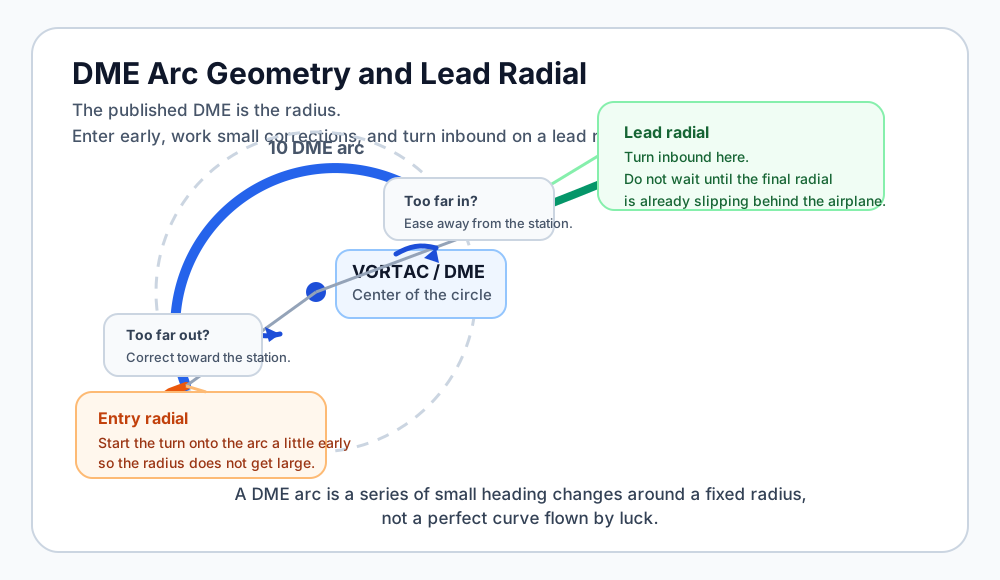
Chart Reading
A DME arc should be briefed from the chart as a complete segment, not just as a number on the plan view. Before reaching the arc, identify:
- the DME source,
- the published arc distance,
- the entry radial or transition fix,
- the exit radial or final approach intercept, and
- the altitude limits and the next event after the arc.
That last point matters because a DME arc is usually not the final task. It often feeds directly into an approach course or intermediate segment. If the pilot treats the arc as a self-contained maneuver, the workload spike comes later when the airplane reaches the exit radial with the next course not yet briefed.
Entry Techniques
Arc entry usually begins from an inbound or outbound radial that leads to the published distance. As the airplane approaches the arc radius, the pilot starts a turn in the direction of the arc and begins balancing heading and DME trend.
One common training technique on a 10-mile arc is the classic turn 10, twist 10 concept: turn about 10 degrees to move around the arc, then monitor the next 10-degree radial as a reference. The exact numbers vary with arc radius, aircraft speed, and wind, but the useful idea is that the pilot works in small predictable bites rather than trying to draw a mathematically perfect circle.
Whether the display is a CDI, HSI, or RMI-style presentation, the entry should feel organized before the aircraft actually arrives on the arc. Waiting until the DME is exact and then deciding what to do next usually produces overshoots.
Tracking the Arc
Once established, arc tracking becomes a cycle of observe, correct, and wait:
- Notice whether DME is increasing or decreasing from the published value.
- Apply a small heading correction toward or away from the station.
- Monitor the radial progression so you know where the airplane is on the arc.
- Reset the next mental target before the airplane gets there.
The key mistake is to focus only on DME and forget that the airplane is also supposed to leave the arc at a specific place. Radius control without radial awareness can still create a missed intercept or a rushed final approach turn.
Older technique often relies on mentally bracketing around the desired DME. Modern panels may overlay the curve on a map display, but the raw task is still the same. The map is support, not a substitute for understanding the arc geometry.
Lead Radials and Exits
The exit from the arc usually requires turning inbound to intercept a final or intermediate course. That turn should begin on a lead radial, not after the airplane has already drifted beyond the published intercept point. The exact lead depends on groundspeed, bank, wind, and arc radius, which is why the correct technique is anticipation rather than a blind one-number rule.
Operationally, brief the arc exit the same way you would brief an approach intercept: what radial tells me it is time to turn, what course am I intercepting next, and what source or mode needs to be active for that next segment? If the answer to those questions is vague, the arc is not actually briefed yet.
Wind and Workload
Wind changes everything about how an arc feels. A tailwind while moving around the outside of the circle can make the airplane blow through radials quickly. A headwind can make it seem sluggish. Crosswind changes how much bank or heading change is needed to hold the radius. That is why the pilot should not expect identical corrections all the way around the arc.
The workload trap is trying to make the arc beautiful while forgetting what comes next. In real IFR use, an adequate arc that sets up the next course cleanly is better than a nearly perfect radius followed by a scrambled intercept. DME arcs are transition tools, not precision contests.
Approach Integration
DME arcs appear most often in the same place the workload is already climbing: arrival and approach setup. That means the pilot should pair the arc brief with the approach brief. If the arc is feeding a nonprecision or localizer-based procedure, the final course, step-down structure, and missed approach should already be understood before the arc entry begins.
The system side of that skill connects directly to VOR Navigation, while the chart side connects to Approaches. The pilot should not reach the arc exit still deciding which course to set or which minima line applies. By then the navigation workload should already be shrinking, not expanding.
References
- FAA Instrument Flying Handbook: practical intercept-and-track technique for ground-based navigation and DME arc management.
- FAA Instrument Procedures Handbook: chart interpretation and procedure use of arc segments on arrivals and approaches.
- FAA Aeronautical Information Manual (AIM): operational guidance on instrument navigation and procedure usage.