Basic Instrument Maneuvers
The practice hub for instrument climbs, descents, turns, and the transition into unusual-attitude recovery.
Quick Reference
Key points
Short-answer refresher for returning pilots before diving into the full page.
Quick Reference
Key points
Short-answer refresher for returning pilots before diving into the full page.
- Climbs, descents, turns, and unusual-attitude recovery all come from the same repeatable pattern: set attitude, set power, trim, and verify.
- Use this page as the hub, then drill the dedicated maneuver pages one at a time until each picture is predictable.
- The goal is not isolated maneuvers; it is making transitions between them feel calm and deliberate on instruments.
Standards & References
FAA doctrinal and ACS cross-reference
Use this box to line the topic up with the FAA’s primary instrument handbooks, the most relevant ACS task areas, and the knowledge, skill, and risk elements that usually drive checkride evaluation.
- IFH Ch. 6, Basic Flight Maneuvers: climbs, descents, turns, and how those maneuvers build the aircraft-control foundation for later attitude recovery.
- Supporting only: maneuver precision underpins the published procedural work in IPH Ch. 2 and Ch. 4.
- IV.B Basic Instrument Maneuvers.
Checkride Focus
How this topic is typically evaluated
Use this block as the ACS-ready summary: what task areas this page supports, what the applicant should know, what the applicant should be able to do, and what risks must be managed without prompting.
Checkride Summary
This hub is checkride-ready when the applicant can treat climbs, descents, and turns as repeatable control sequences instead of isolated tricks, then carry that control discipline into upset recovery and procedures.
Knowledge
- Know the entry, hold, and level-off or rollout logic for climbs, descents, and turns.
- Understand how unusual-attitude recovery grows out of the same basic instrument-control foundation.
- Recognize the common cross-check and trim failures that make basic maneuvers unravel.
Skills
- Enter, stabilize, and recover from basic instrument maneuvers with a repeatable cockpit flow.
- Keep altitude, heading, and airspeed organized while transitioning between maneuvers.
- Use the maneuver-specific pages as one coherent practice sequence rather than unrelated tasks.
Risk Management
- Treating each maneuver as a new improvisation instead of using a standard control loop.
- Letting one maneuver error bleed into the next transition because the scan never fully resets.
- Rushing toward unusual-attitude or procedure work before the basic maneuver picture is stable.
On This Page
Overview
Basic instrument maneuvers are where scan discipline turns into aircraft control. This page is now the hub for the ACS practice flow: review the maneuver logic here, then drill the dedicated climb, descent, and turn pages one by one before folding them back into unusual-attitude recovery and IFR procedures.
Maneuver Map
Instrument Climbs
Build the pitch, power, trim, and airspeed picture for entering and holding a climb.
Instrument Descents
Work the descent picture, rate control, and altitude capture with clean trim discipline.
Instrument Turns
Practice bank entry, altitude holding, rollout timing, and heading precision by instruments.
Climbs and Descents
Climbs and descents are primarily pitch-and-power problems. The airspeed and altitude trends confirm whether the setup is working. Most errors come from changing one without finishing the other. Use the dedicated pages below when you want a tighter ACS practice flow.
Climb flow
- Add climb power.
- Raise to the expected climb attitude.
- Trim for the target airspeed.
- Cross-check altitude trend and heading.
Descent flow
- Reduce power to the planned descent setting.
- Lower to the expected descent attitude.
- Trim for the target airspeed.
- Cross-check rate, altitude capture, and heading.
Open Instrument Climbs for the full setup, hold, level-off, and common-error sequence.
Open Instrument Descents for the full descent setup, rate control, and altitude-capture sequence.
Use the first few seconds of each maneuver to stabilize, not to chase. If the trend is wrong, correct attitude or power with one deliberate change, then rescan.
Turns
Instrument turns are simple if the pilot remembers the sequence: bank in, hold altitude, lead the rollout, bank out. The common mistake is treating heading change as the only job and letting pitch drift during the turn.
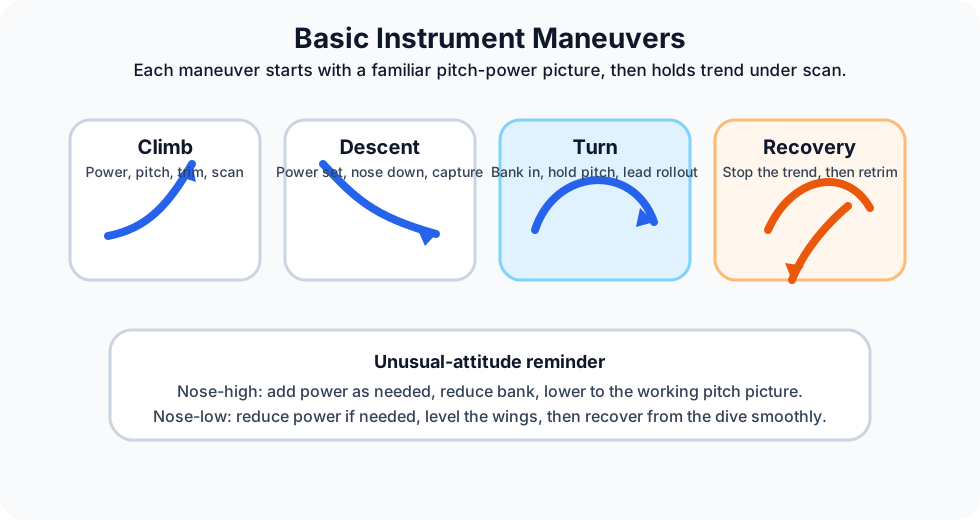
- Entry: set the bank smoothly instead of snapping to it.
- In the turn: scan heading and altitude together.
- Rollout: start the rollout early enough to stop on heading, then return to a normal scan.
Open Instrument Turns for the dedicated rollout, standard-rate, and common-error practice flow.
Unusual Attitudes
Unusual-attitude recovery is still attitude instrument flying, just with less time and less margin. The priorities are to stop the wrong trend first, then return to a normal instrument picture. Always follow aircraft-specific limitations and the recovery procedures taught for your airplane.
Nose-high
- Add power as appropriate.
- Lower the nose to reduce the excessive pitch attitude.
- Reduce bank if present.
- Return to level flight and retrim.
Nose-low
- Reduce power if airspeed is building.
- Level the wings.
- Recover from the dive with smooth pitch.
- Return to cruise power and retrim.
The short cockpit version is power, wings, pitch, trim, but the order changes with the attitude. That is why rote memorization is weaker than understanding the trend the airplane is in.
Use the dedicated Unusual Attitudes page when you want separate recognition cues, recovery logic, and common-error patterns for nose-high and nose-low upsets.
Scenario Walkthroughs
Scenario 1
Nose-high upset after a missed approach power change
You add full power, the airplane pitches up more than expected, airspeed decays, and a shallow bank starts to build.
- Say: "Power set, lower, level."
- Confirm power is appropriate, then reduce the excessive pitch attitude before the stall margin shrinks further.
- Reduce the bank while returning to the known climb picture.
- Retrim only after the airplane is back in a stable climb.
Scenario 2
Nose-low descending turn in IMC
A distraction on vectors turns into a steepening descending bank with airspeed building quickly.
- Say: "Reduce, wings, recover."
- Reduce power if airspeed is running away.
- Level the wings before making the pitch recovery so the load does not climb unnecessarily.
- Recover smoothly from the dive, then return to cruise power and retrim.
Maneuver Brief
What to say and do
- Climb: "Power up, pitch up, trim, scan."
- Descent: "Power set, nose down, trim, capture."
- Turn: "Bank in, hold pitch, lead rollout."
- Unusual attitude: "Stop the trend, recover the attitude, then rebuild the scan."
That brief is intentionally short. It should fit in your head when the workload rises and still leave room for radios, navigation, and traffic or terrain constraints.
References
- Instrument Climbs
- Instrument Descents
- Instrument Turns
- Unusual Attitudes
- FAA Instrument Flying Handbook: climbs, descents, turns, unusual attitudes, and maneuver technique by reference to instruments.
- FAA Airplane Flying Handbook: general maneuver control and attitude recovery principles.