En Route Operations
Airway and RNAV route structure, changeover logic, reroutes, and the practical IFR flow between departure and arrival.
Quick Reference
Key points
Short-answer refresher for returning pilots before diving into the full page.
Quick Reference
Key points
Short-answer refresher for returning pilots before diving into the full page.
- En route legality depends on the controlling altitude and navigation reception on that segment, not just the filed magenta line.
- Reroutes and directs should be rebuilt from present position, next fix, active source, and cleared altitude rather than mentally patched onto the old route.
- Know what hands the airplane off to the next phase: changeover point, arrival transition, vector segment, or amended clearance.
Standards & References
FAA doctrinal and ACS cross-reference
Use this box to line the topic up with the FAA’s primary instrument handbooks, the most relevant ACS task areas, and the knowledge, skill, and risk elements that usually drive checkride evaluation.
- IFH Ch. 9, IFR Flight: route tracking, navigation-source management, amendments, and cockpit flow during the en route phase.
- IFH Ch. 8, Flight Planning: route selection, terrain margin, and fuel or alternate thinking that shape en route decisions before launch.
- IPH Ch. 2, En Route Operations: airway and RNAV route structure, minimum altitudes, changeover points, holding integration, and route amendments.
- III.B Compliance with Departure, En Route, and Arrival Procedures and Clearances.
- V.A Intercepting and Tracking Navigational Systems and DME Arcs.
On This Page
Overview
The en route phase is where the IFR flight settles down, but it is not the phase where the pilot gets to stop thinking. Route structure, minimum altitudes, changeover points, RNAV leg sequencing, and ATC amendments all matter because they determine what path is protected right now and what path the airplane will need next.
En Route Structure
En route IFR is built around published structure. That structure may be conventional airways, RNAV Q-routes or T-routes, direct segments, altitude constraints, and holding fixes. The practical cockpit question is always the same: what route am I actually cleared to fly, and what is protecting that route right now?
Airways and RNAV Routes
- Victor airways: low-altitude routes typically based on VOR structure.
- Jet routes: higher-altitude routes used in the upper en route system.
- T-routes and Q-routes: RNAV-based low- and high-altitude route structure.
- Direct clearances: simplified routing that still depends on navigation capability, terrain margin, and ATC needs.
The route type changes how the pilot thinks. Conventional routing emphasizes course intercepts and changeover logic. RNAV routing emphasizes leg sequencing, active waypoint awareness, and automation mode discipline.
En Route Chart Callouts
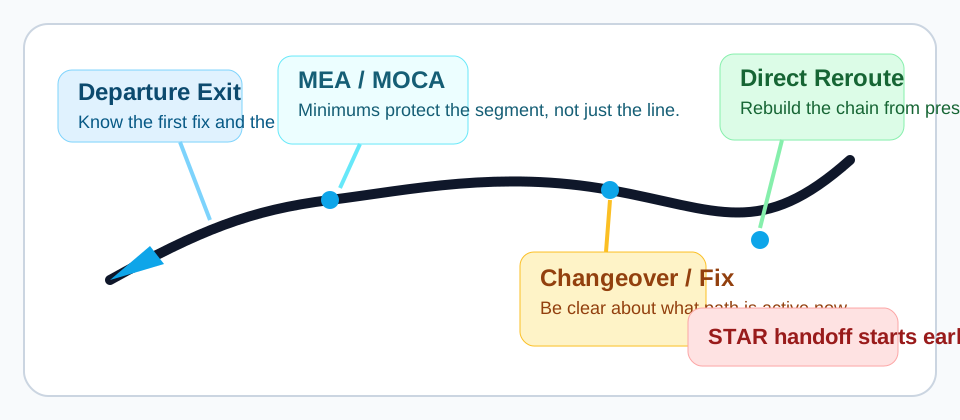
On a practical en route chart review, the pilot should identify the current leg, the next fix, the minimum altitude controlling the segment, whether a changeover point matters for conventional navigation, and what event hands the airplane off to the next segment or clearance.
Changeover and Minimums
En route flying gets messy when the pilot knows the route line but not the conditions that legally and safely support it. Minimum en route altitude, MOCA, MCA, MRA, and changeover points matter because they define whether navigation reception, obstacle clearance, and route use are actually supported on the segment being flown.
Even in RNAV airplanes, the mindset still matters. The avionics can display the next leg cleanly while the pilot still misses the altitude or clearance logic that makes the route usable.
Reroutes and Directs
ATC amendments are an en route normal, not an exception. When a route changes, the pilot should rebuild the cleared sequence from the current airplane position outward instead of trying to mentally patch one fix onto an outdated picture.
A useful rule is: current fix, next fix, active source, cleared altitude, then the rest. That prevents the common mistake of reprogramming the box while losing track of what path the airplane is actually on right now.
Next Concept
A shortcut or descent amendment is usually the first sign that the flight is moving out of stable en route logic and into terminal setup.
Real-Chart Example
For enroute study, pair the current FAA search results for Aspen (KASE) and Denver (KDEN) with the current FAA IFR enroute chart set. Use a departure such as PITKN FIVE (RNAV) or ASPEN SEVEN at KASE and trace how it would hand into the route structure before eventually feeding a Denver STAR such as RAMMS EIGHT or LAWGR FOUR (RNAV).
What to brief from the actual chart chain
- Segment ownership: identify the exact fix where the departure stops protecting you and the enroute segment begins.
- Altitude logic: find the MEA, MOCA, MCA, or route-specific altitude that actually protects the next leg instead of assuming the cruise altitude solves everything.
- Route type change: note whether the leg is a conventional airway, an RNAV route, or a direct segment, because the monitoring task changes with the route type.
- Next handoff: brief the fix or transition that turns the stable enroute picture into the first STAR or arrival setup question.
This kind of exercise is more useful than reading definitions in isolation because it makes the pilot study the route as a chain of protected segments rather than a single magenta line.
Scenario Walkthroughs
Scenario 1
SID exit to airway join
You leave the common SID segment and are cleared to join a Victor airway before the route later goes direct to the STAR entry.
- Confirm the current cleared fix and the airway entry point before touching the box.
- Verify the active source and course capture needed to join the airway cleanly.
- Check the controlling minimum altitude on the next segment before accepting a lower cruise mindset.
- Once established, brief the later direct fix that will replace the airway segment so the next reroute is not a surprise.
Scenario 2
Direct reroute before the arrival
Center shortcuts you direct to a later fix, which deletes several intermediate legs and changes how the arrival will be briefed.
- Read back the new direct clearance exactly before changing anything else.
- Rebuild the route chain from present position to the new direct fix, then from that fix into the expected STAR or approach.
- Recheck altitude expectations and descent timing because the shortcut may remove planned miles.
- Say: "Direct first, arrival second." Do not rebrief the arrival until the new en route leg is stable.
ATC Phraseology
Audio-style en route examples
Center: “Skylane Three Four X-ray, join Victor Four northbound, resume own navigation.”
Pilot: “Join Victor Four northbound, own navigation, Three Four X-ray.”
Center: “Three Four X-ray, direct BRK, then direct KIDNG, rest of route unchanged.”
Pilot: “Direct BRK, then direct KIDNG, rest unchanged, Three Four X-ray.”
Common Traps
- Flying the old clearance: updating the box late or incompletely after a reroute.
- Ignoring minimums: knowing the line but not the altitude logic that supports it.
- Mode confusion: believing the airplane is capturing the next leg when the active source or leg sequencing says otherwise.
- Delaying the arrival brief too long: letting a shortcut erase the margin needed for descent and terminal setup.
References
- FAA Instrument Procedures Handbook: airway and RNAV route structure, minimums, holding integration, and en route operational design.
- FAA Instrument Flying Handbook: practical cockpit technique for tracking and workload management in the en route phase.
- Integrated IFR Procedures
Go Deeper
- Departures: Transition to En Route — the handoff logic that defines where the route really begins.
- ATC System: Vectors, Amendments, and Changes — how route changes should be absorbed without losing the active clearance picture.
- GPS and RNAV Systems: Waypoint and Leg Management — the avionics side of reroutes, directs, and leg ownership.
- STARs and Arrivals — the next phase once descent planning and terminal restrictions start to dominate.