Holding Patterns
Holding pattern purpose, clearances, entries, timing, wind correction, and practical IFR use.
Quick Reference
Key points
Short-answer refresher for returning pilots before diving into the full page.
Quick Reference
Key points
Short-answer refresher for returning pilots before diving into the full page.
- Brief holds from the fix inward: fix, inbound course, protected side, turn direction, leg definition, altitude, and EFC.
- Entry choice depends on a clean geometry picture first; if the protected side is fuzzy, the entry choice is already suspect.
- Wind correction belongs in the plan, not just the debrief; outbound shape controls how stable the next inbound leg will be.
Standards & References
FAA doctrinal and ACS cross-reference
Use this box to line the topic up with the FAA’s primary instrument handbooks, the most relevant ACS task areas, and the knowledge, skill, and risk elements that usually drive checkride evaluation.
- IFH Ch. 9, IFR Flight: holding-task management, navigation-source awareness, and workload control while delaying or sequencing.
- IPH Ch. 2, En Route Operations: holding entries, protected airspace, timing, and wind correction.
- IPH Ch. 4, Approaches: hold-in-lieu-of-procedure-turn use inside approach design.
- V.B Holding Procedures.
Checkride Focus
How this topic is typically evaluated
Use this block as the ACS-ready summary: what task areas this page supports, what the applicant should know, what the applicant should be able to do, and what risks must be managed without prompting.
Checkride Summary
Holding is usually graded on whether the pilot can identify the protected-side picture quickly, enter safely, and stabilize the first circuit before trying to make the hold perfect.
Knowledge
- Know holding-fix identification, protected side, inbound course, entry logic, and timing standards.
- Understand how published holds and hold-in-lieu-of-procedure-turns change the briefing and clearance picture.
- Know when wind correction and timing adjustments should happen relative to the first circuit.
Skills
- Determine a reasonable entry and fly a stable first lap without leaving the protected picture.
- Adjust outbound timing and wind correction after the hold exists as an organized pattern.
- Maintain altitude, heading, and situational awareness while preparing for the next clearance or approach.
Risk Management
- Overthinking the entry instead of prioritizing a stable protected-side maneuver.
- Losing altitude or drifting outside the intended hold while trying to refine timing too early.
- Letting the next approach setup steal attention from basic holding control and clearance compliance.
On This Page
Purpose of Holding
A holding pattern is a racetrack-shaped procedure used to keep an aircraft within protected airspace while delaying further clearance, creating spacing, waiting for weather or traffic to improve, or preparing for the next phase of flight. In IFR operations, a hold is not just a delay tool. It is also a structured way to keep the airplane predictable and obstacle-protected while workload is managed, exactly as described in AIM 5-3-8, Holding.
Pilots may encounter holding instructions from ATC, charted holding fixes, or a hold in lieu of procedure turn on an instrument approach. In each case, the core idea is the same: cross a fix, turn in the appropriate direction, fly the outbound leg, then turn back inbound and repeat as cleared.
Holding Clearance
A complete holding clearance tells the pilot where to hold, what course to hold on, which direction the turns will be made, the leg length if needed, the altitude, and often an expected further clearance time. A classic example is: "Hold east of the ABC VOR on the 090 radial, left turns, maintain 6,000, expect further clearance at 1530."
The important pieces are:
- Fix: the point the aircraft will cross each circuit.
- Holding course or radial: the course used to define the inbound side of the hold.
- Direction of hold: for example east, west, north, or south of the fix.
- Turn direction: right turns unless ATC or the chart specifies left turns.
- Leg length: usually one-minute timing unless DME or RNAV distance is published or assigned.
- Altitude and EFC: essential for separation and especially important if communications are lost.
If the clearance leaves anything unclear, that is the time to ask. A misunderstood hold can create a navigation problem very quickly once the airplane reaches the fix.
Pattern Anatomy
A holding pattern consists of an inbound leg flown toward the fix on the holding course, a turn at the fix, an outbound leg flown away from the fix, and a second turn back to the inbound course. The holding side is the side on which the protected racetrack is built.
Turns in holding are made at standard rate, which is 3 degrees per second, or with about 30 degrees of bank, whichever is less. The objective is not to make aggressive turns but to keep the aircraft predictably inside protected airspace.
The inbound course is the reference that matters most. Once established inbound, the pilot can judge timing, drift, and whether the outbound correction was adequate.
Holding Chart Callouts
A hold should be briefed as a callout pattern, not as a vague racetrack picture. Whether the hold is assigned verbally or published on an en route or approach chart, the pilot should identify the fix, inbound course, holding side, turn direction, leg definition, altitude, and EFC before the airplane crosses the fix.
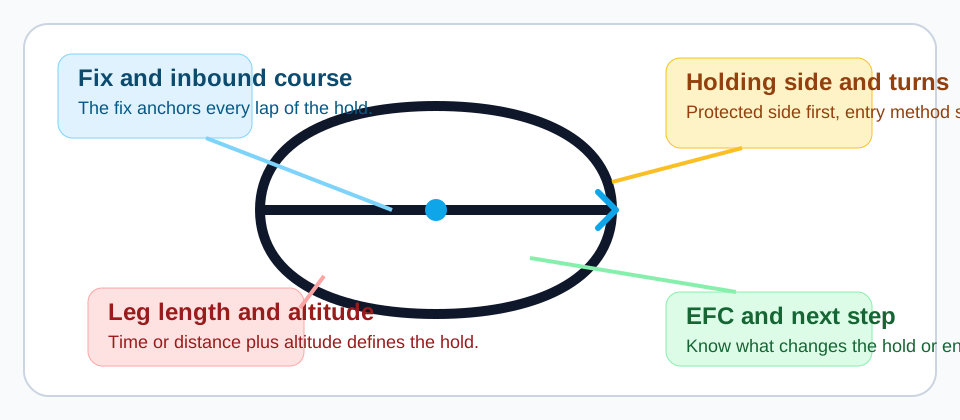
This uses the same study pattern as the other IFR phases: identify what is active now, what protects it, and what event or clearance changes the next segment.
Standard vs. Nonstandard
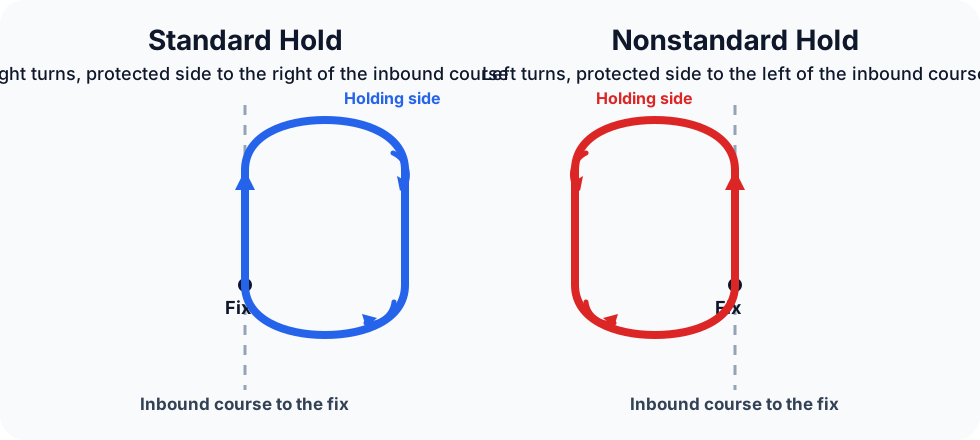
A standard hold uses right turns. A nonstandard hold uses left turns and will be specifically assigned by ATC or depicted on the chart. The protected side of the hold changes with the direction of turn, so recognizing whether the hold is standard or nonstandard is a basic briefing item.
When a hold is charted, the holding side, inbound course, fix, and turn direction are all published. When the hold is assigned verbally, the pilot must build that mental picture from the clearance before crossing the fix.
Speed and Timing
Unless a different speed is required by the chart, the aircraft, or ATC, the standard maximum holding speeds are:
- 200 KIAS at or below 6,000 feet MSL
- 230 KIAS above 6,000 feet MSL up to and including 14,000 feet MSL
- 265 KIAS above 14,000 feet MSL
Standard timing is normally one minute inbound at or below 14,000 feet MSL and one and one-half minutes inbound above 14,000 feet. The outbound leg is then adjusted as necessary to achieve that inbound timing after wind correction is considered. Those speed and timing baselines come straight from AIM 5-3-8j, Holding.
In DME or RNAV holds, distance may replace time. In that case the chart or clearance defines the outbound leg by mileage rather than minutes, but wind still matters for turn anticipation and inbound tracking.
Entries
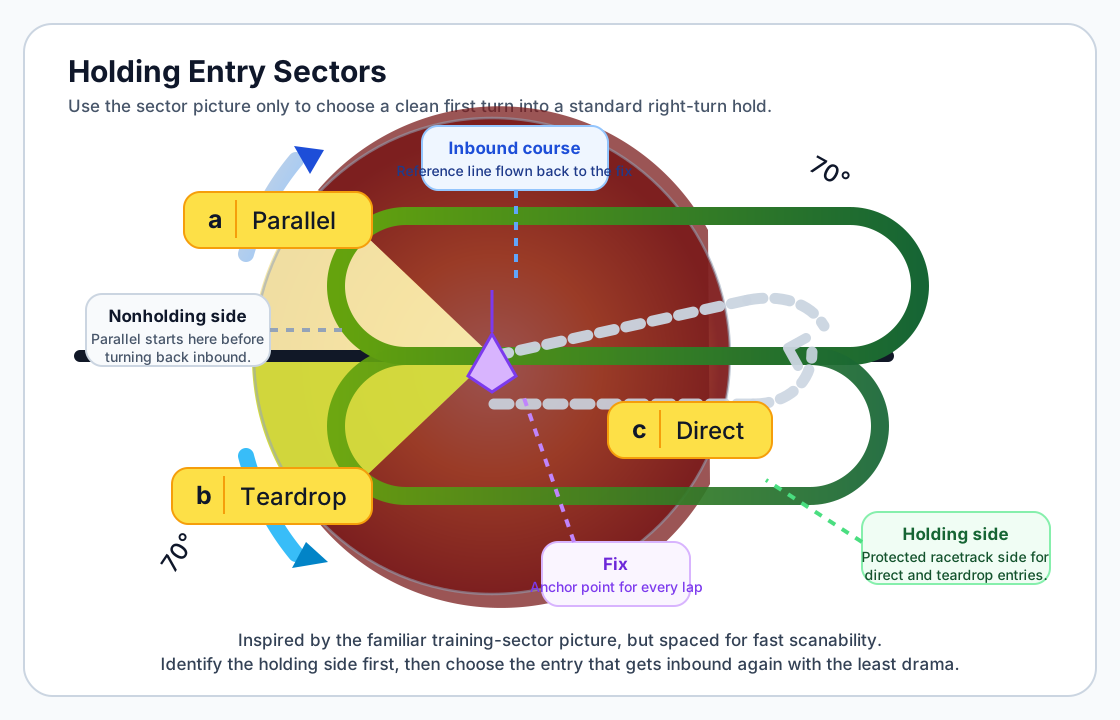
The three standard holding entries are direct, teardrop, and parallel. The purpose of an entry is to transition from the approach to the fix into the protected holding pattern without wandering into the unprotected side or creating an excessively large pattern.
Entry selection is usually taught by sector method, but the exact geometry is less important than staying oriented and ending up on the correct side of the hold. If the airplane remains predictable and protected, the entry has done its job. For the protected-side-first picture behind that choice, see Holding Entry Geometry.
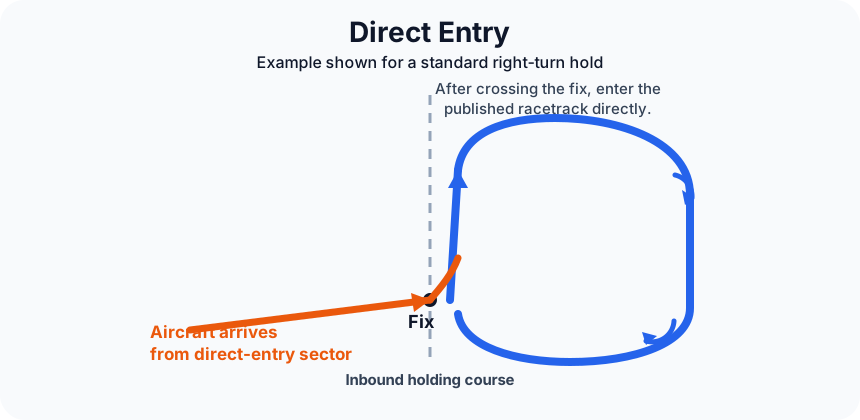
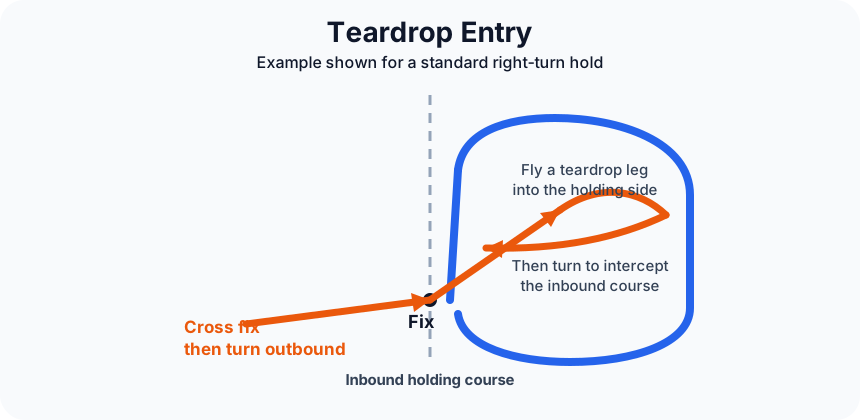
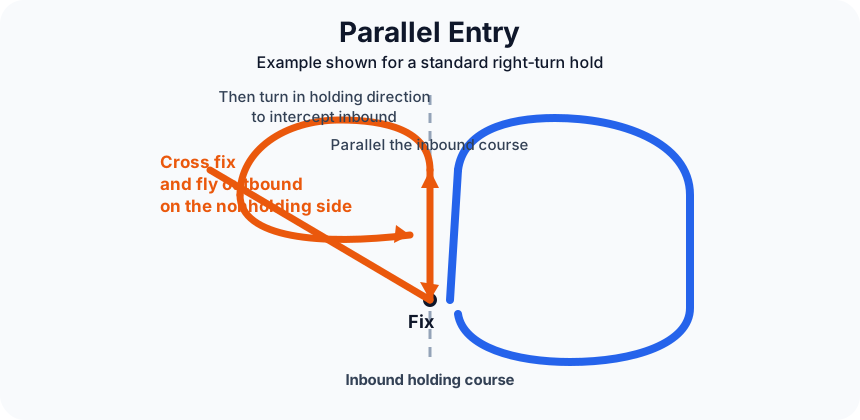
The diagrams below use the same example throughout: a standard right-turn hold. The exact entry depends on the aircraft's arrival heading relative to the published hold, but the point of each entry is the same: arrive at the fix, stay predictable, and get established on the correct side of the racetrack.
Direct Entry
In a direct entry, the aircraft crosses the fix and immediately turns to follow the normal racetrack pattern on the holding side. This is the simplest entry and is commonly used when the aircraft approaches the fix from the holding side or from a heading that naturally leads into the pattern.
Teardrop Entry
In a teardrop entry, the aircraft crosses the fix, turns outbound to a heading offset from the outbound course toward the holding side, flies that leg for the appropriate time or distance, then turns back to intercept the inbound course. The goal is to enter the hold smoothly while remaining on the protected side.
Parallel Entry
In a parallel entry, the aircraft crosses the fix, flies outbound on the non-holding side roughly parallel to the inbound course, then turns in the holding direction to intercept the inbound course and re-enter the racetrack. This entry can look awkward at first, but it becomes manageable when the pilot focuses on the protected side and the next inbound intercept rather than trying to make the picture look perfect.
Wind Correction
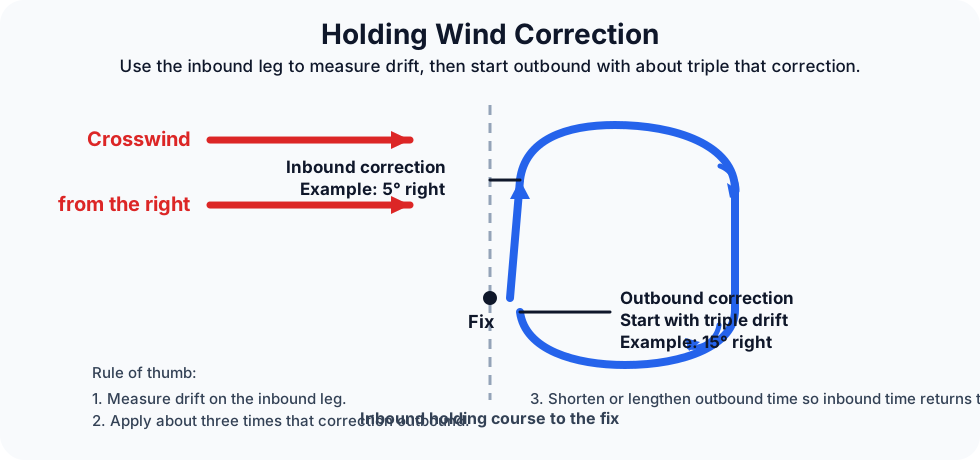
Wind correction is what keeps a hold from drifting into the wrong shape. The pilot uses the inbound leg to judge drift and then adjusts both the outbound heading and outbound timing to arrive back on the inbound course with the desired inbound time.
The FAA Instrument Flying Handbook teaches holding as a continuous correction problem rather than a fixed geometric shape. The inbound leg tells the pilot what the wind is doing, and the outbound leg is where that information is applied to keep the racetrack centered inside protected airspace.
There are really two wind problems in a hold:
- Crosswind: pushes the aircraft sideways and changes where the hold sits relative to the fix.
- Headwind or tailwind: changes how long it takes to fly each leg and affects whether the inbound leg becomes longer or shorter than the standard one minute.
That means heading and timing are corrected together. If the pilot only changes heading but not time, the hold may still stretch on one side. If the pilot only changes time but not heading, the airplane may drift out of the protected pattern.
Triple Drift Rule
A common rule of thumb is to apply the wind correction found inbound, then use roughly three times that correction outbound. This “triple drift” technique appears in common training practice because it gives the pilot a fast, workable starting point without trying to solve the wind triangle precisely in the hold.
For example, if the airplane requires about 5 degrees of crab into the wind to track the inbound course, the pilot would start with about 15 degrees of correction outbound on the same wind side. The logic is practical: the aircraft is not only flying away from the fix on the outbound leg, it is also exposed to the wind during both turns, so the hold tends to drift more on the outbound side than the inbound side.
The Instrument Procedures Handbook and AIM support the broader principle that wind correction should be based on what the airplane actually does in the hold, not on a memorized shape. Triple drift is therefore a starting technique, not a law of nature. If the next inbound leg still shows too much drift, the correction should be adjusted again.
Timing must be corrected at the same time. If the wind creates a tailwind on the outbound leg and a headwind inbound, the airplane will arrive back inbound late unless the outbound time is shortened. If the opposite is true, the outbound leg may need to be lengthened. A practical sequence is:
- Fly the first inbound leg accurately and note the crab angle needed to hold the course.
- Start outbound with about triple that drift correction.
- Adjust the outbound time so the next inbound leg returns to one minute.
- Refine both heading and timing again on each circuit until the pattern stabilizes.
This is why experienced pilots often say that holding is a process of refinement. The first lap gives information. The next lap applies it. Later laps tighten the pattern. The goal is not a perfect textbook racetrack on the first circuit; the goal is a stable, protected hold that stays centered over time.
If the inbound leg is taking too long, shorten the outbound leg. If the inbound leg is too short, lengthen the outbound leg. Holding is not about flying identical shapes every lap; it is about continuously adjusting to keep the protected pattern stable.
Published Holds and HILPT
Some holds are published directly on en route or approach charts, while others are assigned only by ATC. A pilot should brief a published hold just as carefully as a verbal clearance because the chart may contain a specific altitude, speed, turn direction, DME distance, or note.
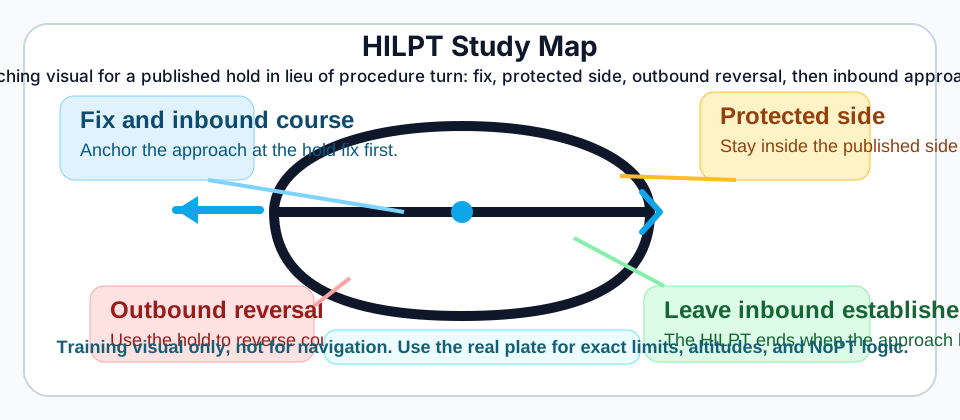
A hold in lieu of procedure turn (HILPT) is a published hold used to reverse course and align the airplane for the approach. It is not simply a place to wait. It is part of the procedure design and must be flown according to the chart unless cleared otherwise, which is why AIM 5-4-9, Procedure Turn and Hold-in-lieu of Procedure Turn is the right official source for that segment.
RNAV holds may use named fixes and leg distances instead of radials and timing. The principle is the same, but the navigation source and briefing details shift from ground-based geometry to waypoint sequencing and distance awareness. That box-management side of the task is covered in GPS and RNAV Systems.
Real-Chart Exercise
To turn hold study into a chart-reading task, open the current FAA search results for Aspen (KASE) or another airport with approach procedures that include course-reversal or published hold logic, then compare the charted procedure segment with an ATC-style hold briefing. The goal is to force the hold out of the abstract and back onto a real plate.
What to brief from a real charted hold or HILPT
- Fix and inbound course: identify the anchor point and the exact inbound course before worrying about the entry type.
- Holding side and turns: the protected side and turn direction matter more than making the entry look elegant.
- Leg definition: determine whether the hold is time-based, DME-based, or RNAV distance-based.
- Why the hold exists: separate a delay hold, a HILPT, and a missed-approach hold because the pilot's next task is different in each one.
If the chart includes a HILPT, brief when it is required, when it is skipped because of a NoPT or vectors clearance, and what event ends the hold and starts the inbound approach segment. That is the holding skill the FAA actually tests, and the study map above is meant to make that handoff feel as visual as the approach examples elsewhere in the section.
Practical Technique
A good holding brief answers six questions before the fix: where is the fix, what is the inbound course, what side is the hold on, what direction are the turns, what entry will I use, and what speed and timing apply? If any of those are uncertain, workload increases dramatically once the fix is crossed.
For execution, a practical sequence is:
- Slow to an appropriate holding speed before the fix.
- Cross the fix cleanly and start the planned entry.
- Time the appropriate leg or monitor the published distance.
- Track the inbound course precisely and note the wind correction required.
- Adjust the outbound heading and timing on the next circuit.
The best scan in holding is disciplined and simple. The pilot should avoid chasing every small deviation and instead use each lap to improve the next one. A hold flown calmly with small corrections is usually more accurate than one flown with constant aggressive changes.
References
- FAA Instrument Flying Handbook: primary FAA reference for holding clearances, entries, timing, and wind correction technique.
- FAA Instrument Procedures Handbook: chart interpretation, procedure design, and published holding guidance including HILPT concepts.
- AIM 5-3-8, Holding: operational holding guidance, speed limits, timing, entries, and RNAV hold considerations.
- AIM 5-4-9, Procedure Turn and Hold-in-lieu of Procedure Turn: how published HILPT segments differ from delay holding.
- Terminal Procedures Publication: the controlling source for any specific charted hold, HILPT, notes, and altitude restrictions being flown.
Go Deeper
- Holding Entry Geometry - protected-side visualization and sector logic for direct, teardrop, and parallel entries.
- GPS and RNAV Systems - sequencing, suspend mode, and RNAV hold execution details when the box is flying the racetrack.
- Approaches: Procedure Turns and Course Reversals - where HILPT use fits into approach setup and inbound handoff.